

The Great Resignation debate suggests that during the coronavirus crisis, workers would have increasingly switched the industry in which they were previously employed. This is not the case for Germany, as the new IAB-LinkedIn Reallocation Radar shows. With this, current transitions on the labour market can be mapped in a timely manner in the future.
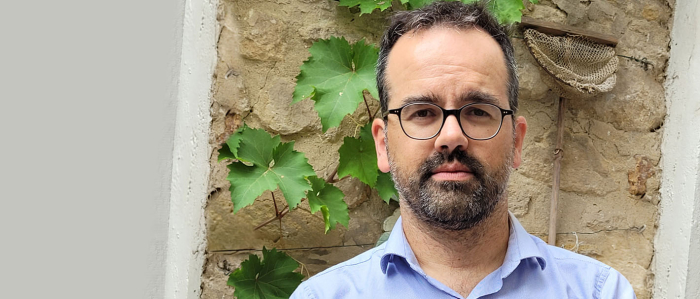
Alexander Hijzen, a senior economist at the Organisation for Economic Co-Operation and Development (OECD), gives an overview of the country-specific application of short-time work during the Covid-19 crisis and identifies specific features that can serve as an inspiration for others.

During the Covid-19 pandemic, governments around the world responded with a variety of labor market policy tools to prevent job losses. The United States focused primarily on two such programs: Short-Time Compensation and the Paycheck Protection Program. In this interview, Till von Wachter, Professor of Economics at the University of California, will give some insights read full article

In France, just like in many other European countries, short-time work has proved to be a powerful tool to prevent massive layoffs during the Covid-19 pandemic. The traditional French short-time work scheme (“Activité partielle”) has been in place since 1951. In this interview, Pierre Cahuc, Professor of Economics at Sciences Po in Paris, will give read full article

In the autumn of 2022, eleven European institutes for labour research established the “Network of European Labour Market Research Institutes” (ELMI). In this interview, the project’s initiators, Professor Christina Gathmann (LISER) and Professor Bernd Fitzenberger (IAB), discuss the added value of cooperation, the versatile activities already being developed by ELMI, and the future visions of read full article

In many European countries, short-time work proved to be a strong measure to combat massive layoffs during the Covid-19 pandemic. In the case of Italy, a scheme widely used in former times of crisis was applied and partly modified: “The Cassa Integrazione Guadagni”. In this interview, Giulia Giupponi, Assistant Professor of Economics at Bocconi University, read full article

More than one million people have fled Ukraine to find refuge in Germany. But how are they doing in the meantime? Between August and October 2022, the IAB together with three project partners interviewed more than 11,000 of these people about their living situation in Germany. The institutes participating in the project have now presented read full article

In Germany, short-time work has played a crucial role in stabilising the labour market both in the financial and the coronavirus crisis. At the same time, the administration of short-time allowance has been an enormous challenge for the Federal Employment Agency. In an interview with IAB Forum, Eva Strobel, agency manager, discusses possible approaches to read full article

Young adults are tomorrow’s workforce in times of aggravating skill shortage. Their mental health and well-being decide over their labour market success and influence the future development of the economy. Over the course of the Covid-19 pandemic, associated containment measures, and the economic downturn, the mental health of young people declined – more severely than read full article
<< Newer Posts:::Older Posts >>