
4. May 2026 | Interviews
The gender AI gap: “AI is becoming a key resource – but men and women are not using it in the same way”
Most people are now familiar with the term ‘gender pay gap’. Now a new one has been coined: the gender AI gap. Could you briefly explain what is meant by that?

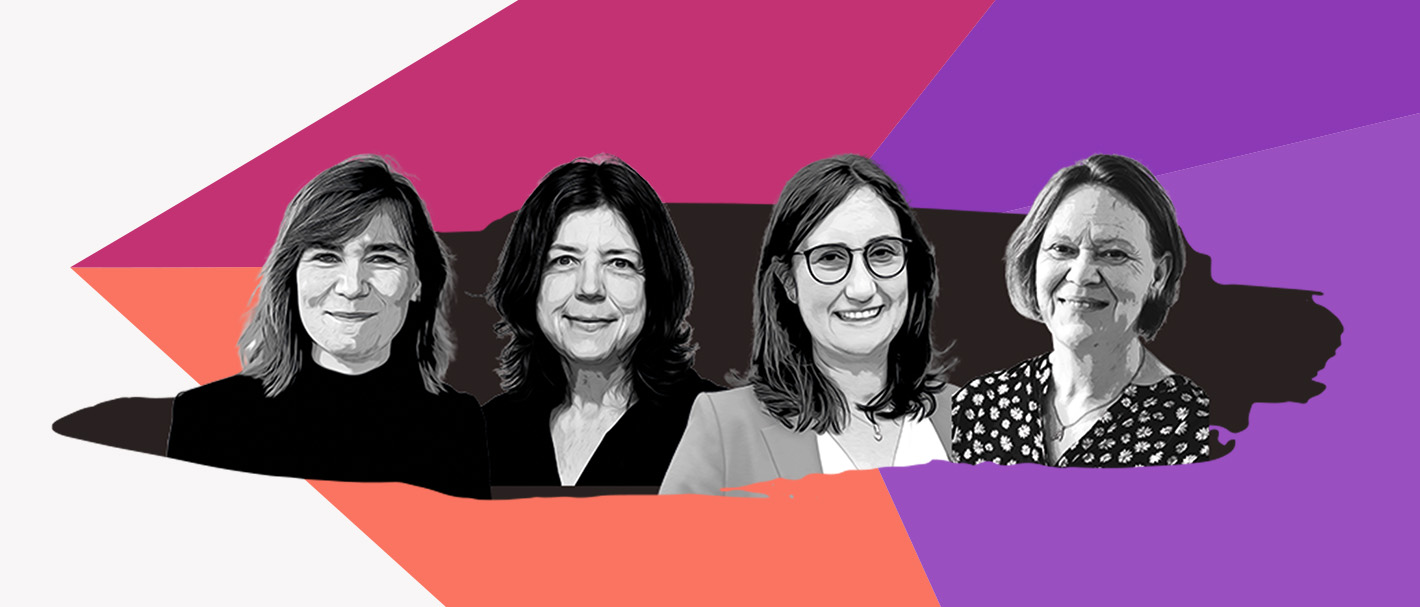
Dr Katharina Diener is an consultant to the institute’s executive board at the IAB.
Katharina Diener: The gender AI gap refers to the measurable disparity between women and men in the use of AI applications. Our study of over 4,800 people of working age clearly shows that women use AI less frequently and less intensively than men. The gap is 16 percentage points. A closer look reveals a more nuanced picture. Even after accounting for key factors such as age, education, income, job context, attitudes, and skills, a gap of eight percentage points remains.

Dr Carola Burkert is a research associate in the IAB’s regional research network.
Carola Burkert: The gender AI gap is therefore neither a coincidence nor an individual phenomenon but rather a structural pattern. Our experience with other forms of inequality in the labour market has shown that such gaps are not so easy to close. Without targeted measures, the gender AI gap will not close on its own.
The gender AI gap is most pronounced in intensive use.
Why is the gender AI gap so relevant to equality in the labour market?

Sandy Jahn is a Senior Analyst for Strategic Insights & Analytics at Initiative D21 e.V.
Sandy Jahn: Much like internet access was 20 years ago, AI is becoming a key resource in the workplace. Those who regularly use AI are more productive, more flexible, and more likely to advance and earn more. Conversely, those who do not use AI are more likely to fall behind.

Dr Britta Matthes heads the “Occupations in the Transformation” research group at the IAB.
Britta Matthes: We find it particularly concerning that the gender AI gap is most pronounced in intensive use. In other words, it appears where AI is not just used occasionally but rather where strategic, creative, and economically relevant outcomes are generated. This is where women are currently clearly underrepresented.
Jahn: Here, we fear consequences that go beyond the individual. If women are absent from these processes, their perspectives are less likely to be incorporated into the design of AI-supported working environments. As a result, inequalities in career opportunities and income growth may become more firmly established, and the risk that the use of technology will favour certain groups may increase. The gender AI gap is therefore not merely a matter of gender equality but rather a strategic challenge for innovation and social participation.
In Generation Z, around one in two men use AI extensively but not even one in three women do.
Ms Burkert, you analysed the social background of the men and women surveyed. We might expect younger people to be more digitally engaged – and the gender gap to be smaller. However, your study shows the opposite. How do you explain that?
Burkert: For one thing, men get involved in AI much earlier and much more extensively. In Generation Z, around one in two men use AI extensively but not even one in three women do; this is a difference of almost 20 percentage points. One reason for this is that young men are more likely to work in tech-oriented environments in which AI is routinely used. Informal networks also reinforce these differences, particularly among younger people; men benefit much more from technology-focused social circles and communities, whereas women are less likely to have access to them. Formal learning opportunities play only a limited role for this age group. Very early on, this creates a competitive edge that quickly takes hold.
Education and income do not appear to bridge the gap. Your study shows that the gap is even wider among those with greater resources. What could explain this?
Burkert: Essentially, I see three mechanisms at work here. First, higher education has an asymmetrical effect. Men benefit more from higher qualifications because they are more likely to work in AI‑related professions, whereas women, despite similar qualifications, are more likely to remain in roles in which AI is less visible or less strategically integrated. Second, increasing incomes reinforce existing advantages in terms of access. As income increases, the likelihood of men using AI increases considerably more than that of women. Those already in the lead thus continue to pull further ahead. Finally, informal learning networks are once again playing a key role. Men benefit greatly from their tech-savvy peers. Women are less likely to have access to such support networks. Even when resources are plentiful, this dynamic reinforces the differences.
Women use AI tools more often than men for analytical tasks while men use AI much more often than women for planning tasks.
Ms Matthes, your analysis shows that those in the trades use AI much less frequently than those in creative fields. That’s hardly surprising, really. But is the nature of the work sufficient to explain gender differences?
Matthes: The nature of the work helps determine whether AI is used at work. Manual work largely involves tasks that must be carried out by hand. While robots can already perform some of these tasks, skilled trades often require a specific combination of mobility, dexterity, and situational adaptability – for example, when working in tight corners or on uneven surfaces. Technically speaking, AI isn’t capable of doing that yet. It is more likely to be used in controlled, digital environments such as in planning, flexible control, or documentation, including in the skilled trades. Wherever text, images, and code are created and edited, the proportion of work that can be handled by AI tools is considerably higher.
Interestingly, gender differences vary greatly across different fields of work. For analytical tasks, women use AI tools more often than men; for teaching, both genders use them at almost the same rate and intensity; and for planning tasks, men use them much more often than women. This means that there must be reasons beyond the nature of the work that explain why women use AI less often than men.
In order to ensure that women and men have equal access to AI, companies must actively implement AI.
Would it be enough simply to give men and women in the workplace equal access to digital devices and infrastructure?
Matthes: No. Men actually make even greater use of AI when companies simply provide the opportunity to use digital devices and infrastructure at work. In order to ensure that women and men have equal access to AI, companies must actively implement AI. Our study shows that when companies implement or pilot AI applications and provide relevant training programmes, the gender AI gap disappears. Active implementation means that it should not be left up to employees to decide whether and when they may use AI to carry out tasks.
What else is needed at an organisational level to ensure that the use of AI becomes routine for both genders?
Matthes: In order to build acceptance and trust in such systems, companies must establish clear guidelines for system design, particularly regarding the handling of company and customer data in AI applications. This reduces barriers and sets clear boundaries. Basic training on what AI is and how it is typically used provides a solid foundation for applying it in the workplace. Initiatives that take a gender-sensitive approach to different situations and needs should be prioritised. In order to ensure equal participation of women and men, AI training courses should be offered explicitly during working hours rather than in the evening.
Could you give a specific example to illustrate this? What do companies that get this right do?
Matthes: There is no one-size-fits-all solution to this. In small companies, this sort of thing usually happens informally. When management recognises that AI enhances office work in particular, internal recognition can shift towards work predominantly carried out by women. It is important to try out how specific tasks can be carried out using AI tools and how the quality of results can be improved. Women engaging with other women in the same field can help break down barriers. Training should focus on ensuring that results are transparent and thus reproducible – for example, by teaching AI models to explain how a given result was reached. In short, it’s all about practical learning opportunities.
The perceived benefits help bridge the gender gap.
Ms Jahn, you investigated what motivates people to try out AI in the first place. What is the strongest motivator – and does it differ between women and men?
Jahn: The strongest driver for using AI is the clear personal benefit it offers. In our study, this is particularly evident in the enthusiasm for the idea that AI could take over simple, monotonous tasks: People who expect this are 30 percentage points more likely to use AI. The key point is that this applies equally to men and women. The perceived benefits bridge the divide; here, the gender AI gap is no longer apparent.
The situation is quite different when it comes to fear as a motivator. Concern about becoming redundant through automation increases AI use only among men. For women, this vague sense of threat does not have a comparable effect. Men tend to respond to this fear of becoming redundant by becoming more active, whereas women do not. This is where a clear divide emerges. This leads us to a clear recommendation: to promote the widespread use of AI, it is better to focus on specific examples of how it can ease the day-to-day workload rather than relying on fear.
Women are particularly motivated to use a tool when they recognise a specific benefit.
You also measured the digital resilience of the respondents. In other words, whether they embrace digital transformation, feel well positioned within it, and are not overwhelmed. Digitally resilient people tend to use AI more. Your study shows the opposite – at least in the case of women. What could explain this?
Jahn: That is actually one of the most surprising findings of our study. Intuitively, we would actually expect resilient people to use AI more frequently. For men, however, we see neither a positive nor a negative effect. And for women, the picture is actually the opposite: Resilient women are less likely to use AI than non-resilient women. This means that the gender AI gap among resilient individuals is widening considerably – from 1 to 12 percentage points.
We were unable to establish a causal link for this using the data available. But there are plausible explanations. A recent study by Sophie Borwein and colleagues shows that women systematically perceive AI as riskier than men do and that this perception is linked to greater risk aversion. It is conceivable that resilient women, who approach change in a particularly thoughtful manner, weigh up the benefits and risks of AI more critically and are more likely to conclude that it does not offer them any personal benefit – at least not yet. This is also consistent with another finding from our study: women are particularly motivated to use a tool when they recognise a specific benefit. Without a clear sense of benefit, openness to digital transformation alone is not enough.
Much like the gender pay gap, there is a risk that these patterns will become firmly established without targeted intervention.
Ms Diener, the gender pay gap has persisted for decades despite the measures taken to address it. Are we currently witnessing the emergence of a second divide before the first one has been bridged?
Diener: This concern is entirely justified. The findings of our IAB studies on this topic have also resonated with me. In my PhD research, I examined in detail how childcare arrangements and the division of labour within the household influence the participation of women in the labour market. What was observed there essentially applies here too. Structural inequalities do not arise from individual decisions but rather from the interplay between institutional frameworks, social norms, and organisational logic. I see this dynamic at play in the gender AI gap as well.
Our data further reinforce these concerns. As Carola Burkert pointed out, one in two men in Generation Z uses AI extensively but not even one in three women do. Ironically, the gap is widening precisely where the digital workplace of the future is taking shape. And, much like the gender pay gap, there is a risk that these patterns will become firmly established without targeted intervention. However, the difference is that we now have early insight – and know which adjustments are needed.
What are the key areas where policy-makers need to take action now in order to reduce the gender AI gap?
Diener: Three key findings stand out from our results. First, training has a clear effect, and its benefits differ by gender. Women benefit more than average from employer-funded training programmes when they use AI extensively. Where such initiatives are implemented, the gap narrows to one percentage point with the intensive use of AI. Second, the use of AI in companies should not be left to chance. Companies must actively and systematically implement AI throughout their operations. Where AI is used systematically, the gender AI gap is no longer statistically relevant. Finally, communication should focus more on the specific benefits. The expectation that AI will take over monotonous tasks is the main driver behind its use among both women and men.
Germany ranks among the lowest for female representation in the AI sector.
Germany is not the only country grappling with this issue. How do we compare internationally when it comes to the gender AI gap?
Burkert: Not particularly well. However, studies from around the world such as those from Harvard show that the gender gap in the use of generative AI exists almost everywhere regardless of region, sector, or profession. It could be described as almost universal.
However, when compared with other European countries, Germany lags even further behind. Only around 20 per cent of AI specialists in Germany are women; this is one of the lowest figures in the EU. Countries such as Sweden rank considerably higher while Germany ranks among the lowest when it comes to female representation in the AI sector. In short, while the gender AI gap is a structural problem worldwide, Germany is particularly underrepresented within Europe. We see this as a real risk to competitiveness and equality.
One last question: Do you use AI in your work – and if so, has that changed your perspective on the subject of the research?
Jahn: Yes, I regularly use AI in my work. And I can confirm the findings of our study from my own experience: For me, the strongest driver is the clear added value. What has changed as a result of my own experience is, above all, a more realistic understanding of what AI can and cannot do. I use it much more selectively now than I did at the start. This awareness of the limitations of technology has made me more efficient because I spend less time reworking flawed or unusable results. My experience has also shown me just how crucial specialist and methodological knowledge is for being able to evaluate AI results and interpret them meaningfully. All of this is knowledge that can be gained only through actively engaging with the technology and not simply by reading about it. This directly reflects our research findings. Those who do not use AI fail to build this practical knowledge, struggle to assess the added value of this technology, and are less able to benefit from it.
literature
Burkert, Carola; Diener, Katharina; Jahn, Sandy; Matthes, Britta (2026): Digital Gender Gap. Schwerpunkt 2026: Künstliche Intelligenz. Publisher: Initiative D21 e. V. and Institut für Arbeitsmarkt- und Berufsforschung (IAB).
DOI: 10.48720/IAB.FOO.20260504.02
This publication is published under the following Creative Commons Licence: Attribution – ShareAlike 4.0 International (CC BY-SA 4.0):
https://creativecommons.org/licenses/by-sa/4.0/deed.de
Keitel, Christiane (2026): The gender AI gap: “AI is becoming a key resource – but men and women are not using it in the same way”, In: IAB-Forum 4th of May 2026, https://iab-forum.de/en/the-gender-ai-gap-ai-is-becoming-a-key-resource-but-men-and-women-are-not-using-it-in-the-same-way/, Retrieved: 21st of October 2026
Diese Publikation ist unter folgender Creative-Commons-Lizenz veröffentlicht: Namensnennung – Weitergabe unter gleichen Bedingungen 4.0 International (CC BY-SA 4.0): https://creativecommons.org/licenses/by-sa/4.0/deed.de

Authors:
- Christiane Keitel